
Bible Study: Jesus is the bread of life
John 6:22-40

Click here to read the passage, John 6:22-40.
Jesus is the Bread of Life
Main Idea
Eternal life is found only in Jesus, the bread of life, which you can receive only by repenting and believing in him.
Summary
After feeding the 5,000, the crowd seeks Jesus — but for more physical bread. Jesus confronts their shallow motives and redirects them to what truly matters: not food that perishes, but the food that leads to eternal life.
He declares himself the bread from heaven, sent by God, and promises that whoever comes to him and believes in him will have eternal life and be raised on the last day.
Commentary
We all know the feeling of hunger. Our bodies need food to survive, and hunger signals that need. But we also experience spiritual hunger — an emptiness inside that also needs to be satisfied.
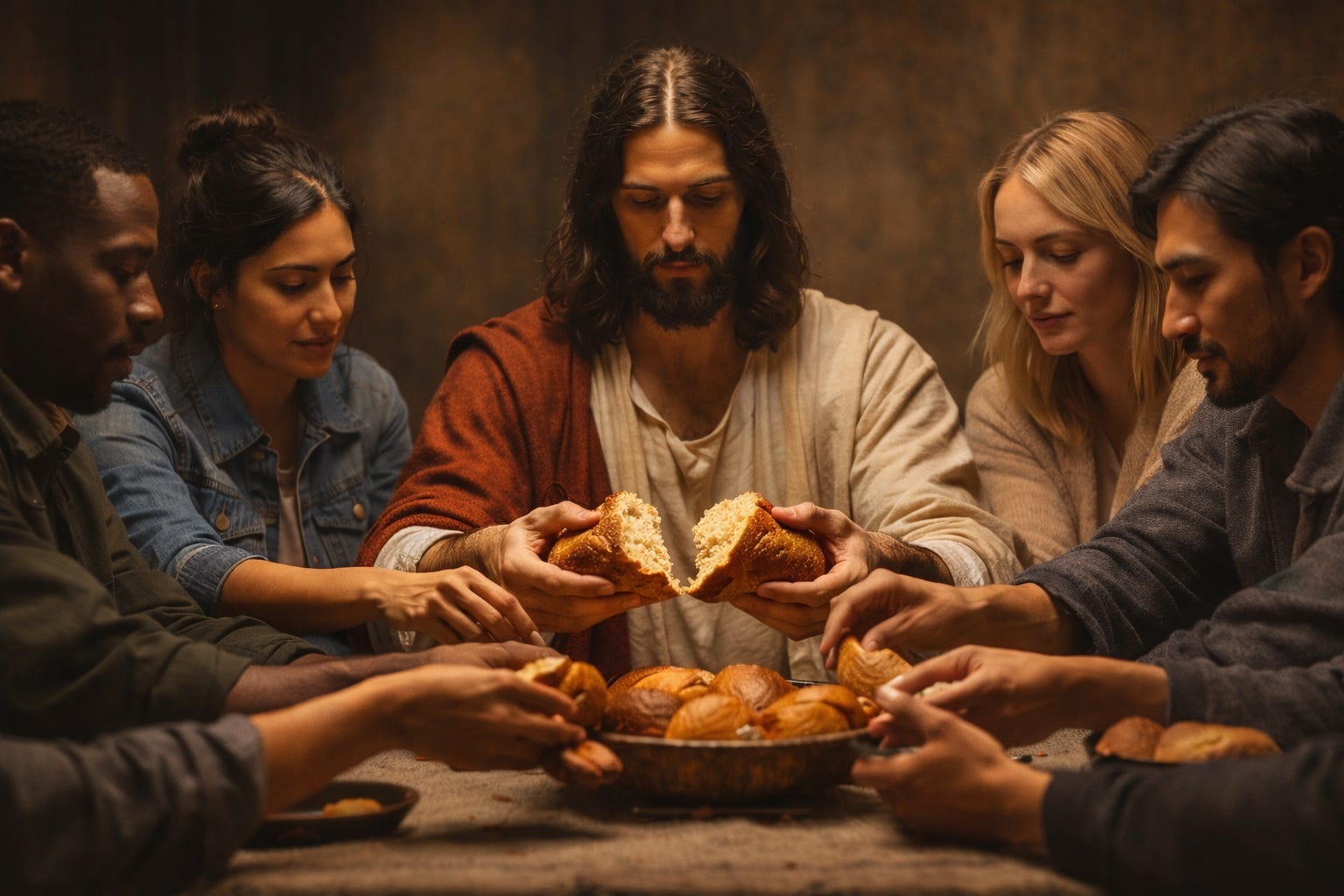
In this passage, Jesus speaks of being “the bread of life” — the only thing that can truly satisfy our souls.
The previous day, Jesus had 5,000 men plus their families take a seat on the hillside. He then prayed over five small loaves of bread and two pieces of dried fish. He turned that meager meal into an abundant stream of fish and bread, feeding everyone who was hungry.
The miraculous work of Jesus reminded the people of something similar in the history of Israel. When the nation of Israel had journeyed from Egypt to the promised land, God sustained them daily with manna.
Just as God sent his people bread when they were physically hungry, God has sent us bread to quench our spiritual hunger.
Key Takeaways
Physical satisfaction is temporary. Spiritual satisfaction is found only in Jesus.
Jesus is not just a provider of bread — he is the bread.
Belief in Jesus is the only way to receive eternal life.
God’s will is both to save and to keep those who come to Christ.
Quotes
Leon Morris (Anglican New Testament scholar who died in 2006): “They were moved not by full hearts, but by full bellies.”
Frederick Dale Bruner (Presbyterian theologian): “To receive Jesus is to take him in as the very nourishment of life.”
Charles Spurgeon (Baptist pastor who died in 1892): “Christ is the bread which feeds the deepest hunger of the soul.”
Questions
What does Jesus mean when He says, “I am the bread of life” (John 6:35)? How does this statement connect to the Israelites’ experience with manna in the wilderness?
Why do you think the crowd pursued Jesus across the sea? Were they seeking him for the right reasons? How can we apply this to our own motives in following Christ?
In verse 27, Jesus contrasts food that spoils with food that endures to eternal life. How can we pursue “spiritual food” in our daily lives? What does that look like practically?
The people ask Jesus, “What must we do to do the works God requires?” (v. 28). How does Jesus’ answer in verse 29 challenge or simplify our understanding of faith and works?
In verses 30-31, the people ask for a sign, referring to the manna given in the wilderness. Why do you think they were still asking for signs, even after witnessing miracles? How does this reflect our own spiritual doubts?
Jesus promises in verse 37, “Whoever comes to me I will never drive away.” How does this promise of inclusion impact your understanding of God’s grace and our relationship with him?
What does it mean to “believe” in Jesus according to this passage? How is this belief deeper than mere intellectual assent? How can we cultivate a stronger, more personal belief in Jesus as our spiritual sustenance?